
Oncology teams operate at the intersection of science, patient care, and regulation. Every document—every dataset—carries extraordinary weight. Clinical trial protocols, genomic data, regulatory submissions, licensing agreements, and patient-related information aren’t just sensitive. They’re mission-critical.
Yet many oncology organizations still rely on tools designed for everyday file sharing: email, shared drives, or generic cloud storage platforms. These tools weren’t built for the realities of oncology data—and the risks of using them are far greater than most teams realize.
Oncology data requires a different standard of secure sharing. Here’s why.
Oncology Data Is Inherently High-Risk
Unlike general business documents, oncology data often includes:
- Clinical trial protocols and amendments
- Investigator brochures and informed consent forms
- Genomic and biomarker data
- Regulatory submissions to FDA, EMA, or other authorities
- Intellectual property tied to novel therapies
- Confidential collaboration and licensing agreements
A single breach, versioning error, or unauthorized disclosure can result in:
- Regulatory delays or failed inspections
- Loss of intellectual property
- Compromised patient privacy
- Erosion of trust with partners and investors
In oncology, the margin for error is razor thin.
Collaboration Is Constant—and Complex

Oncology research and treatment are rarely siloed. Data flows between:
- Research institutions and hospitals
- Sponsors and CROs
- Regulatory agencies
- Academic collaborators
- Strategic partners and licensors
Each stakeholder needs different access to different documents, often across borders and time zones. Sharing everything via email attachments or open-access folders quickly becomes unmanageable—and dangerous.
Without granular permission controls and clear audit trails, organizations lose visibility into:
- Who accessed what
- When data was viewed or downloaded
- Which version is authoritative
That lack of visibility becomes a liability during audits, inspections, or disputes.
Regulatory Scrutiny Is Unforgiving
Oncology teams are subject to intense regulatory oversight. Whether it’s an FDA inspection, EMA review, or internal compliance audit, documentation must be:
- Accurate
- Complete
- Current
- Easily retrievable
Regulators don’t just look at the documents themselves—they examine how those documents were managed and shared.
Questions like:
- Who had access to this data?
- Were changes tracked and approved?
- Can you demonstrate document integrity over time?
Without a secure, auditable environment, answering those questions becomes difficult—if not impossible.
Intellectual Property Is the Core Asset
In oncology, IP isn’t a line item. It’s the business.
Therapeutic data, research findings, and trial outcomes directly influence:
- Valuation
- Licensing negotiations
- M&A transactions
- Strategic partnerships
Using unsecured or loosely controlled sharing tools exposes organizations to:
- Accidental leaks
- Unauthorized downloads
- Premature disclosure of proprietary research
Once IP is compromised, it can’t be recovered.
Why Generic File-Sharing Tools Fall Short
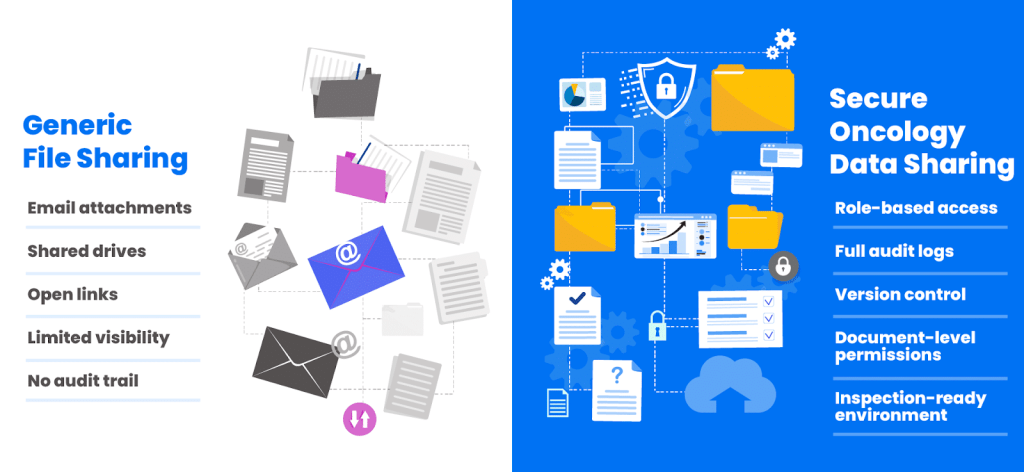
Traditional file-sharing platforms were designed for convenience—not compliance, not audits, and certainly not high-stakes oncology workflows.
Common limitations include:
- Broad, all-or-nothing access controls
- Poor version tracking
- Limited or unreliable audit logs
- Inadequate protection against accidental sharing
- No deal- or trial-specific segregation of data
In oncology, “good enough” security simply isn’t good enough.
A Higher Standard for Oncology Data Sharing
Secure sharing in oncology requires an environment built specifically for sensitive, regulated information—one that supports:
- Role-based and document-level permissions
- Full audit trails for every action
- Version control across teams and institutions
- Secure collaboration without sacrificing speed
- Inspection and diligence readiness at all times
Virtual data rooms provide that foundation, enabling oncology teams to collaborate confidently without compromising security or compliance.
The Cost of Getting It Wrong Is Too High
For oncology organizations, data security isn’t just an IT concern—it’s a strategic imperative.
The right secure sharing framework:
- Protects patients
- Preserves intellectual property
- Accelerates regulatory and deal timelines
- Builds trust with partners and regulators
As oncology research becomes more collaborative, more global, and more competitive, the standard for secure data sharing must rise to meet it.Because in oncology, the data doesn’t just support the work—it is the work.