In corporate dealmaking, speed, trust, and control are everything.
Whether you’re running a sell-side process, raising capital, or managing due diligence, the virtual data room (VDR) you choose can directly impact deal timelines, buyer confidence, and ultimately—valuation.
But here’s the problem: most teams don’t know how to properly evaluate or purchase a virtual data room. They either overpay for bloated platforms or choose underpowered tools that slow deals down.
This guide breaks down exactly how to purchase a virtual data room for corporate dealmaking—so you can move faster, stay secure, and maintain leverage throughout your transaction.
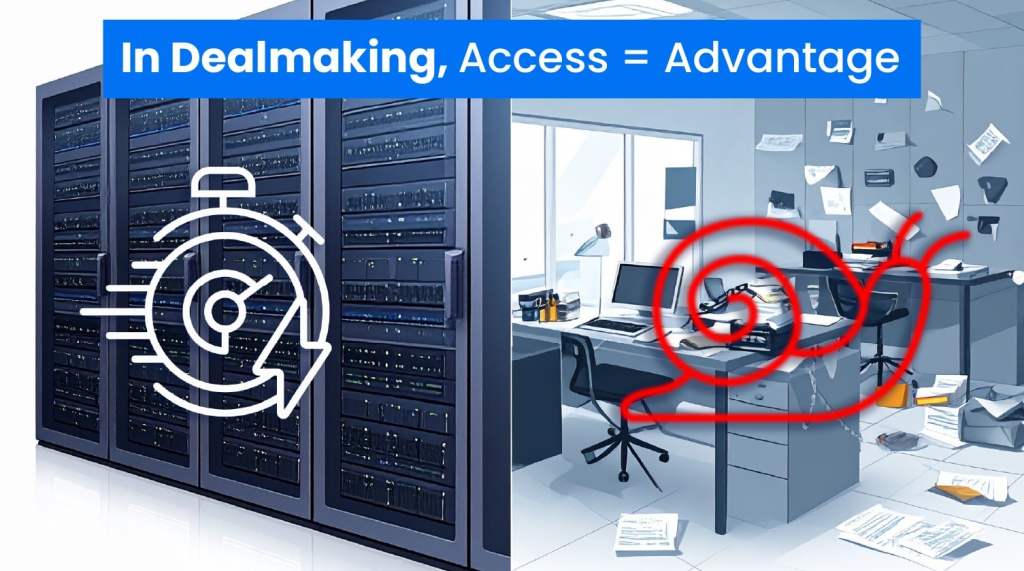
Why Choosing the Right VDR Matters in M&A
Deals don’t fall apart because of spreadsheets.
They fall apart because of:
- Disorganized diligence
- Delayed access to critical documents
- Security concerns from buyers
- Poor visibility into buyer engagement
A purpose-built virtual data room eliminates these risks by:
- Centralizing all deal documents
- Controlling access at a granular level
- Tracking buyer activity in real time
- Streamlining communication during diligence
The right VDR doesn’t just store files—it accelerates deals.

Step 1: Define Your Use Case (Before You Evaluate Vendors)
Not all VDRs are built for corporate dealmaking.
Before you start comparing providers, clarify:
- Deal type: M&A, capital raise, restructuring, licensing
- Deal size: $5M vs. $500M+ impacts feature needs
- Stakeholders: Internal teams, bankers, legal, buyers
- Timeline: Urgent process vs. long-term pipeline
Example:
An investment bank running a competitive auction will need:
- Advanced permission controls
- Buyer activity tracking
- Bulk upload and organization tools
A corporate development team may prioritize:
- Ongoing document management
- Internal collaboration
- Long-term scalability
Step 2: Prioritize Security and Compliance
Security isn’t a checkbox—it’s a deal requirement.
Buyers will evaluate how your data is handled. Weak security can erode trust instantly.
Look for:
- End-to-end encryption
- Dynamic watermarking
- Granular permission controls (view, download, print)
- Multi-factor authentication (MFA)
- Audit trails and activity logs
- Compliance certifications (ISO 27001, ISO 42001, SOC 2)
A strong security posture signals professionalism—and reduces buyer friction.
Step 3: Evaluate Ease of Use (This Impacts Deal Speed)
If your VDR is hard to use, your deal slows down.
You want:
- Fast onboarding (minutes, not days)
- Drag-and-drop uploads
- Intuitive folder structures
- Bulk actions (permissions, uploads, edits)
- Clean UI for external users (buyers, attorneys)
Reality:
Buyers won’t tell you your data room is frustrating—they’ll just disengage.
Ease of use = faster diligence = stronger outcomes.
Step 4: Look for Buyer Activity Tracking & Insights
This is where top deal teams separate themselves.
Modern VDRs should provide:
- Document-level tracking (who viewed what)
- Time spent per document
- Buyer engagement heatmaps
- Alerts for key activity
Why it matters:
- Identify serious buyers early
- Adjust negotiation strategy
- Detect red flags before they become issues
In competitive processes, this data is leverage.
Step 5: Assess Scalability and Performance
Corporate dealmaking isn’t static.
Your VDR should handle:
- Large file sizes (financial models, videos, data sets)
- Hundreds of users simultaneously
- Rapid document updates without lag
- Global access without performance issues
A slow or unstable data room can derail momentum during critical phases of a deal.
Step 6: Compare Pricing Models (Avoid Hidden Costs)
VDR pricing can vary widely—and often isn’t transparent.
Common pricing structures:
- Per page/document
- Per user
- Flat monthly fee
- Deal-based pricing
Watch out for:
- Overages on storage
- Fees for additional users
- Charges for support or features
Best practice:
Choose predictable pricing aligned with your deal size and timeline.
Step 7: Evaluate Customer Support (This Is Underrated)
When your deal is live, support matters.
Look for:
- 24/7 live support
- Dedicated account managers
- Fast response times
- Experience with M&A workflows
In high-stakes transactions, delays aren’t acceptable.
Step 8: Request a Demo (And Test Real Scenarios)
Don’t just watch a demo—simulate your deal.
Test:
- Uploading large document sets
- Setting permissions across multiple groups
- Inviting external users
- Running reports
Ask yourself:
- How quickly can we get this live?
- Would buyers find this intuitive?
- Does this reduce friction—or add to it?
Common Mistakes When Purchasing a Virtual Data Room
Avoid these pitfalls:
1. Choosing based on price alone
Cheap VDRs often cost more in lost time and deal friction.
2. Ignoring user experience
If buyers struggle, your process suffers.
3. Overlooking analytics
Without insights, you lose strategic advantage.
4. Not planning for scale
Your needs will grow—your VDR should too.
What the Best Deal Teams Do Differently
Top-performing M&A teams:
- Standardize their VDR process across deals
- Prepare data rooms early (“always be deal ready”)
- Use analytics to guide negotiations
- Prioritize buyer experience as much as internal organization
They don’t treat the VDR as a tool.
They treat it as a competitive advantage.
Final Thoughts: The Right VDR Drives Better Outcomes
Purchasing a virtual data room isn’t just a technical decision—it’s a strategic one.
The right platform will:
- Accelerate diligence
- Increase buyer confidence
- Improve deal visibility
- Help you close faster—and stronger
In today’s market, where speed and precision matter more than ever, your VDR isn’t just supporting the deal.
It’s shaping it.
Looking for a Virtual Data Room Built for Dealmaking?
If you’re evaluating options, focus on platforms designed specifically for M&A not generic file-sharing tools.
Because when the deal is on the line, how you share matters just as much as what you share.