Every transaction depends on information.
Whether you’re selling a company, raising capital, licensing intellectual property, or conducting legal discovery, sensitive documents must be shared with outside parties. The challenge is providing buyers or investors with enough information to evaluate the opportunity without exposing confidential data that should remain private.
That’s where redaction becomes essential.
Proper redaction protects confidential information while allowing the rest of the document to remain accessible. Done correctly, it reduces legal risk, protects privacy, and keeps transactions moving. Done poorly, it can expose customer information, financial data, intellectual property, or personally identifiable information that should never have been shared.
As deal volumes increase and document sets grow into the thousands, manual redaction is becoming increasingly difficult to manage. Modern virtual data rooms now use artificial intelligence to automate much of the process while maintaining accuracy and security.
This guide explains everything deal teams need to know about redaction, including best practices, common mistakes, and how AI is changing document security.
What Is Redaction?
Redaction is the process of permanently removing or obscuring sensitive information from a document before it is shared.
Instead of deleting an entire document, only specific pieces of confidential information are hidden while the remaining content stays readable.
Common examples include:
- Social Security numbers
- Bank account numbers
- Customer names
- Personal addresses
- Employee compensation
- Trade secrets
- Proprietary pricing
- Protected health information
- Personally identifiable information (PII)
Unlike simply covering text with a black box, proper digital redaction permanently removes the underlying content so it cannot be recovered.
Why Redaction Matters During Due Diligence
Due diligence requires companies to disclose enormous amounts of confidential information to outside parties.
Investment bankers
Private equity firms
Strategic buyers
Attorneys
Auditors
Lenders
Potential investors
Each group needs enough information to evaluate the business without receiving unrestricted access to sensitive data.
Redaction helps organizations:
- Protect customer privacy
- Comply with regulations
- Preserve competitive advantages
- Prevent accidental disclosure
- Reduce legal liability
- Maintain confidentiality throughout negotiations
Without proper redaction, organizations risk exposing information that could negatively impact valuation, negotiations, or regulatory compliance.
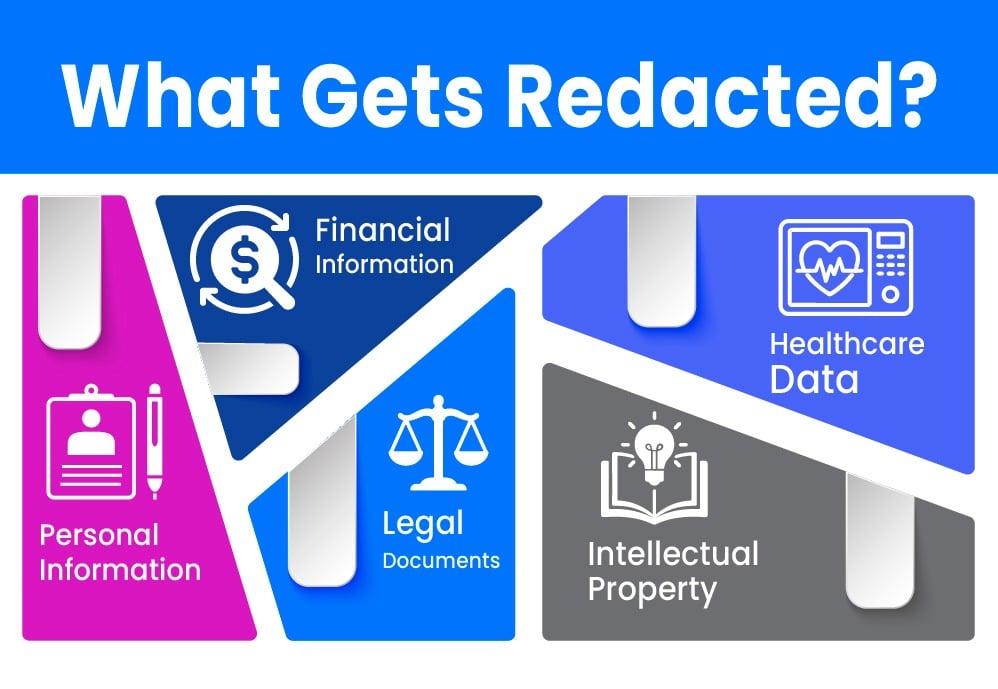
Types of Information Commonly Redacted
Personal Information
Names
Social Security numbers
Driver’s licenses
Dates of birth
Phone numbers
Email addresses
Home addresses
Financial Information
Bank account numbers
Routing numbers
Credit card numbers
Payroll information
Tax IDs
Revenue by customer
Compensation details
Legal Information
Attorney client privileged communications
Pending litigation strategy
Settlement amounts
Confidential contracts
Healthcare Information
Patient records
Medical record numbers
Insurance information
Protected Health Information (PHI)
Intellectual Property
Source code
Product formulas
Algorithms
Manufacturing processes
Trade secrets
Industries That Rely on Redaction
M&A
Investment bankers regularly redact customer names, pricing schedules, employee information, and confidential contracts before documents enter the virtual data room.
Private Equity
PE firms frequently redact information during both buy side and sell side diligence to protect portfolio companies and sensitive financial data.
Life Sciences
Biotech and pharmaceutical companies often redact patient information, clinical trial data, licensing agreements, and proprietary research.
Legal
Law firms use redaction extensively during litigation, investigations, and document production.
Healthcare
Healthcare organizations must remove protected health information to remain HIPAA compliant.
Government
Government agencies routinely redact classified information and personally identifiable information before releasing public records.
Common Redaction Mistakes
Using Black Boxes Instead of True Redaction
Simply placing a black rectangle over text in Word or PDF does not remove the underlying content. Users may still be able to copy, search, or recover hidden information.
Missing Sensitive Information
Large document collections make manual review difficult. Even experienced reviewers can overlook confidential information.
Redacting Too Much
Over-redaction reduces document usefulness and slows due diligence because buyers ask additional questions.
Redacting Too Late
Waiting until diligence begins often delays the transaction while documents are manually reviewed.
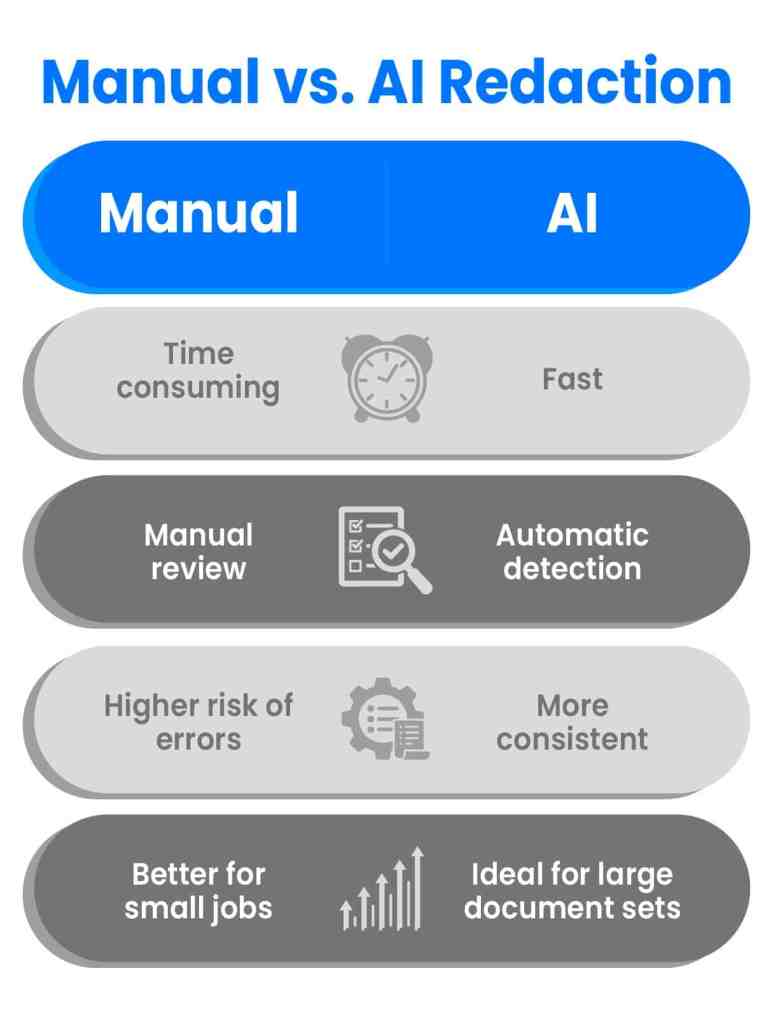
Manual vs AI Redaction
| Manual Redaction | AI Redaction |
| Time intensive | Processes thousands of pages quickly |
| Higher chance of human error | Consistent detection |
| Difficult to scale | Ideal for large transactions |
| Labor intensive | Minimal manual effort |
| Reviewer fatigue | Faster document preparation |
Artificial intelligence dramatically reduces the time required to identify sensitive information while maintaining consistency across large document collections.
Human review remains important, but AI eliminates much of the repetitive work.
How AI Redaction Works
Modern AI redaction tools automatically identify sensitive information within documents using machine learning and optical character recognition.
These systems can detect:
- Names
- Addresses
- Phone numbers
- Email addresses
- Social Security numbers
- Credit card numbers
- Tax IDs
- Medical information
- Financial identifiers
Users review suggested redactions before applying them, combining automation with human oversight.
Why AI Redaction Is Transforming Due Diligence
Transactions increasingly involve tens of thousands of pages.
Investment bankers and legal teams no longer have time to manually inspect every document.
AI enables organizations to:
- Prepare data rooms faster
- Reduce administrative work
- Improve consistency
- Protect confidential information
- Accelerate deal timelines
- Lower transaction risk
As due diligence becomes more data intensive, AI redaction has become an important competitive advantage.
Redaction Best Practices
Begin reviewing documents before diligence starts.
Use true digital redaction rather than visual masking.
Standardize redaction policies across the organization.
Review AI suggestions before publishing.
Maintain an audit trail.
Control document permissions inside the virtual data room.
Limit downloads when appropriate.
Use watermarking alongside redaction for additional protection.
How Virtual Data Rooms Improve Redaction Security
A secure virtual data room provides additional protection beyond document redaction.
Capabilities often include:
- Granular permissions
- Dynamic watermarking
- View only access
- Download restrictions
- Audit logs
- User authentication
- Expiring access
- AI assisted redaction
- Secure document sharing
Together, these features help organizations confidently share confidential information during high stakes transactions.
Frequently Asked Questions
What is redaction?
Redaction permanently removes sensitive information from a document before it is shared.
Is covering text with a black box considered redaction?
No. Unless the underlying text is permanently removed, the information may still be recoverable.
What types of documents require redaction?
Financial statements, contracts, employee records, legal documents, healthcare records, tax documents, customer lists, and many others.
What is AI redaction?
AI redaction uses artificial intelligence to automatically identify sensitive information that should be removed before sharing documents.
Can AI replace manual review?
No. AI significantly reduces workload but human verification remains important.
Is redaction required during M&A?
Many transactions require redaction to protect customer information, employee data, intellectual property, and confidential financial information.
Does a virtual data room perform redaction?
Many modern virtual data rooms include built in AI redaction capabilities or integrate with redaction workflows.
What’s the difference between redaction and encryption?
Encryption protects an entire file from unauthorized access. Redaction permanently removes selected information while leaving the rest of the document visible.
Can redacted information be recovered?
Proper digital redaction permanently removes the information. Simple visual masking does not.
What regulations commonly require redaction?
Organizations often redact information to support compliance with HIPAA, GDPR, CCPA, FINRA, SEC requirements, and various privacy laws.
Final Thoughts
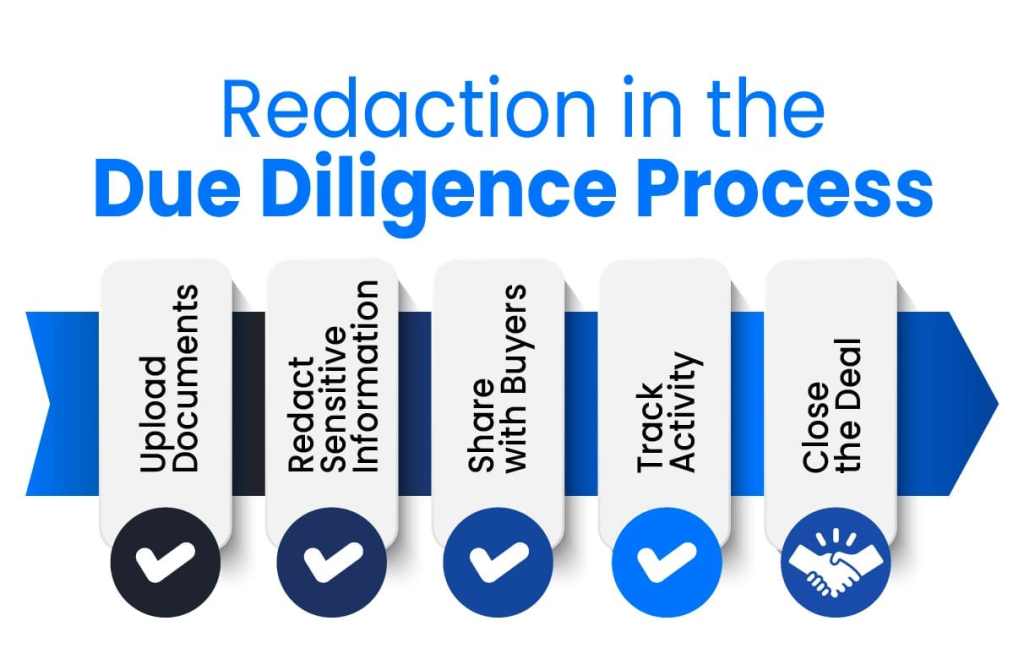
Redaction is no longer just a legal requirement. It is a fundamental part of secure dealmaking.
As transaction volumes increase and due diligence becomes more complex, organizations need faster, more accurate ways to protect confidential information without slowing negotiations. AI powered redaction combined with a secure virtual data room enables deal teams to prepare documents more efficiently while maintaining complete control over sensitive information.
Whether you’re preparing for an acquisition, fundraising, litigation, or strategic partnership, effective redaction helps protect your business while keeping the process moving.
Want to see ShareVault’s powerful AI redaction in action and see how it can speed up your next deal?