
The M&A market is evolving once again.
After several years defined by rising interest rates, cautious buyers, and extended deal timelines, the market is beginning to find its footing. Transactions are moving forward, but the playbook has changed.
The companies that succeed in today’s environment are not necessarily the largest or the fastest growing. They are the ones that understand how buyer expectations have shifted and how the deal process itself is evolving.
For investment bankers, private equity firms, corporate development teams, and business owners, understanding these changes is becoming just as important as identifying the right opportunity.
Here are some of the biggest trends shaping dealmaking today.
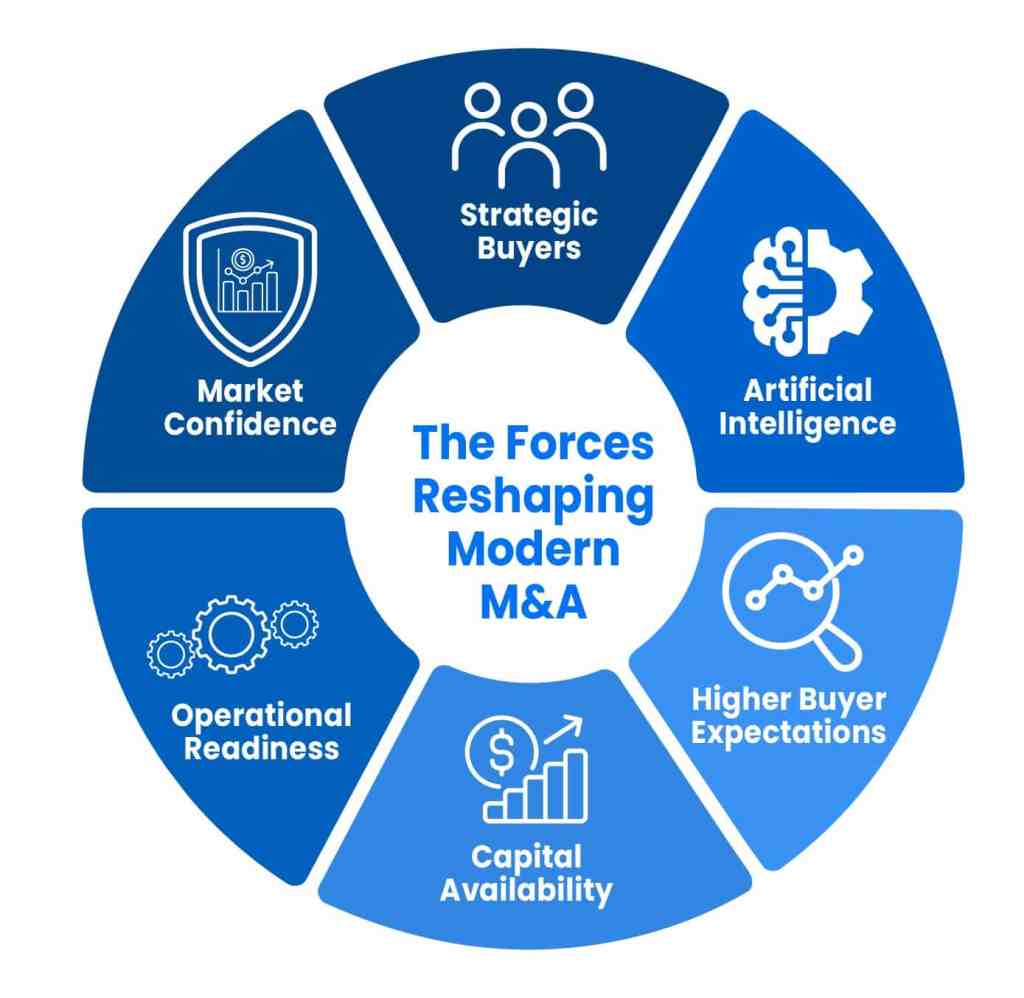
Strategic Buyers Are Back in the Market
While financial buyers remain active, many strategic acquirers are once again pursuing acquisitions as a path to growth.
Several factors are driving this shift.
Many corporations have strengthened their balance sheets over the past few years and are looking beyond organic growth. Acquisitions offer an opportunity to enter new markets, acquire technology, strengthen product portfolios, or expand customer relationships.
Unlike private equity firms, strategic buyers often evaluate long term value beyond immediate financial returns.
For sellers, this means understanding the motivations behind each buyer has never been more important.
Buyers Are Spending More Time Before the Letter of Intent
One noticeable shift is when diligence begins.
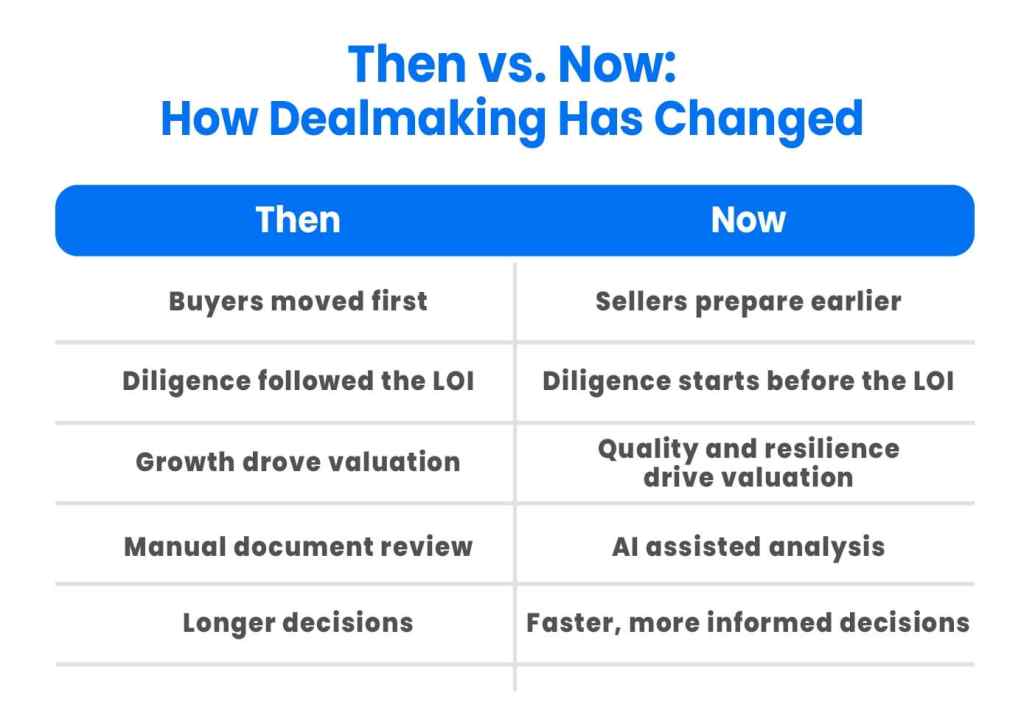
In previous years, many buyers reserved deeper analysis until after a Letter of Intent was signed.
Today, buyers are conducting far more research before making an offer.
Public information, industry intelligence, management interviews, and preliminary document reviews are helping buyers form opinions much earlier in the process.
As a result, sellers have fewer opportunities to correct inconsistencies or explain surprises after exclusivity begins.
Preparation is becoming a competitive advantage.
Artificial Intelligence Is Making Buyers More Efficient
Artificial intelligence is not replacing dealmakers.
It is helping them ask better questions.
Deal teams are using artificial intelligence to analyze financial trends, summarize contracts, identify operational risks, compare market data, and surface potential concerns faster than traditional manual review.
This allows buyers to spend less time searching for information and more time evaluating what that information means.
For sellers and advisors, that means greater transparency and stronger preparation are becoming increasingly valuable.
Valuation Is Becoming More Nuanced
The conversation around valuation has matured.
While growth remains important, buyers are placing greater emphasis on durability.
They want to understand whether revenue is recurring, whether customers are loyal, whether operations can scale efficiently, and whether leadership has demonstrated consistent execution.
Businesses with disciplined operations, predictable performance, and clear growth strategies often receive stronger interest than companies relying on aggressive projections alone.
Quality is becoming just as important as growth.
Execution Is Becoming a Differentiator
Competitive transactions rarely succeed because of one great negotiation.
They succeed because hundreds of smaller details are managed effectively throughout the process.
Investment bankers who anticipate buyer questions, management teams that respond quickly, and advisors who maintain momentum often create better outcomes for everyone involved.
Execution is no longer viewed as administrative work.
It is a strategic advantage.
Confidence Is Replacing Certainty
Markets remain dynamic.
Economic conditions continue to evolve, financing costs fluctuate, and geopolitical developments can influence transaction activity with little warning.
No deal team can eliminate uncertainty.
The best teams create confidence despite it.
They communicate clearly.
They prepare thoroughly.
They adapt quickly when circumstances change.
Confidence has become one of the most valuable assets in modern dealmaking.
What This Means for the Months Ahead
The second half of the year is expected to bring continued opportunity across the middle market.
Private equity firms continue to seek attractive investments. Strategic buyers remain active. Business owners who delayed exits are returning to the market as confidence improves.
At the same time, buyers are becoming more disciplined, expectations remain high, and execution matters more than ever.
The firms that recognize these new realities will be better positioned to advise clients, navigate complex transactions, and create successful outcomes.
The rules of dealmaking have not been rewritten.
They have evolved.
The organizations that evolve with them will be the ones leading the next generation of successful transactions.