Virtual Data Room FAQ Hub
What Is a
Virtual Data Room?
What Is a Virtual Data Room?
A virtual data room, or VDR, is a controlled online environment used to organize and share confidential business information with authorized participants.
Companies commonly use VDRs during mergers and acquisitions, fundraising, due diligence, audits, legal matters, licensing, strategic partnerships, and other projects where sensitive documents must be reviewed by people inside and outside the organization.
Unlike an ordinary online folder, a virtual data room is designed around the requirements of confidential, document-heavy business processes.
How Does a Virtual Data Room Work?
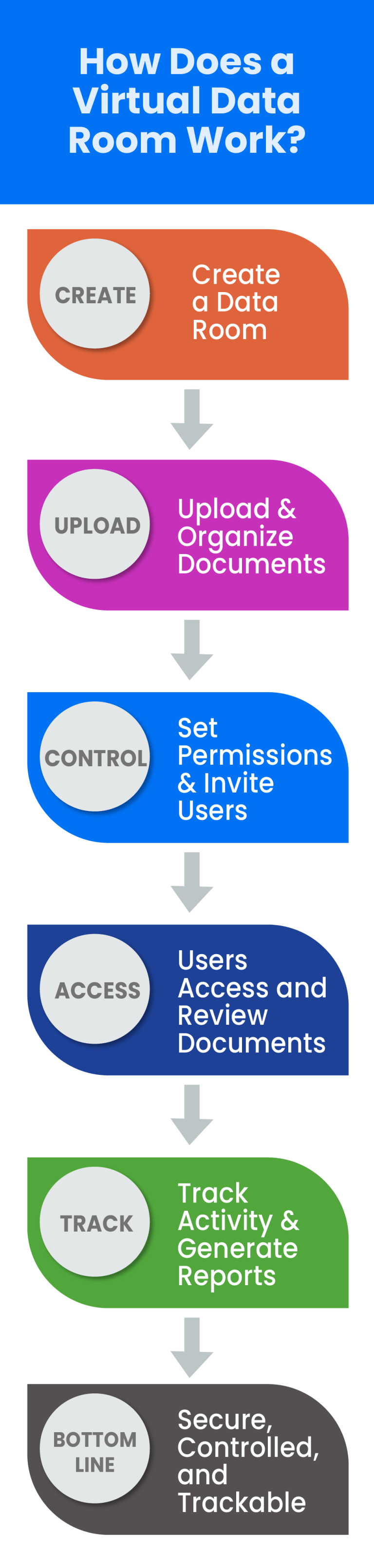
An organization typically begins by creating a data room for a particular transaction or project.
Documents are uploaded and organized into folders, categories, or indexes so reviewers can locate relevant information efficiently. Administrators then invite users and determine which information each person or group is allowed to access.
Different participants may receive different levels of visibility.
For example, one buyer may be able to review a particular folder while another group cannot access it. Administrators may also be able to restrict downloading or printing, apply watermarks, set expiration dates, or revoke access when it is no longer required.
Many VDRs also provide encryption, authentication controls, activity tracking, and detailed audit trails.
These capabilities help organizations maintain greater control as confidential information moves across multiple internal and external stakeholders.
Why Do Companies Use VDRs?
The need for a virtual data room usually emerges when ordinary document-sharing workflows become difficult to manage.
During due diligence, hundreds or thousands of documents may need to be collected from different departments and reviewed by buyers, attorneys, accountants, lenders, consultants, or other parties.
Managing that activity through email attachments, individual links, or several shared drives can introduce unnecessary friction.
A VDR creates a centralized source of information that can be updated and managed throughout the project.
Search, indexing, Q&A, reporting, redaction, and other tools may also help teams navigate large document collections and respond to requests more efficiently.
Most importantly, a virtual data room combines access with control.
Companies need to make information available so transactions can progress, but they also need to protect that information, understand who is accessing it, and keep the review process organized.
A VDR provides the infrastructure to do those things within one environment.
For that reason, a virtual data room is best understood not simply as secure online storage, but as a tool for managing confidential information across complex business processes with greater clarity, visibility, and control.