Virtual Data Room FAQ Hub
What Is the Difference Between a Virtual Data Room and Cloud Storage?
What Is the Difference Between a Virtual Data Room and Cloud Storage?
Cloud storage and virtual data rooms both allow organizations to store and share files online, but they are designed for different types of work.
Cloud storage is primarily built for everyday file access and collaboration. A virtual data room is designed for business processes where confidential information must be shared across multiple parties with tighter control, greater visibility, and a more structured workflow.
That distinction becomes particularly important during M&A, fundraising, due diligence, legal reviews, audits, licensing, and other high-stakes projects.
Everyday Collaboration vs. Controlled Processes
Cloud storage works well when employees need to collaborate on routine documents, share internal files, or access information from different locations.
But transaction workflows create different requirements.
During due diligence, for example, a company may need to provide hundreds or thousands of documents to buyers, attorneys, accountants, advisors, and lenders. Those participants may require different levels of access, and some information may need to remain restricted until later in the process.
A virtual data room is built to manage that complexity.
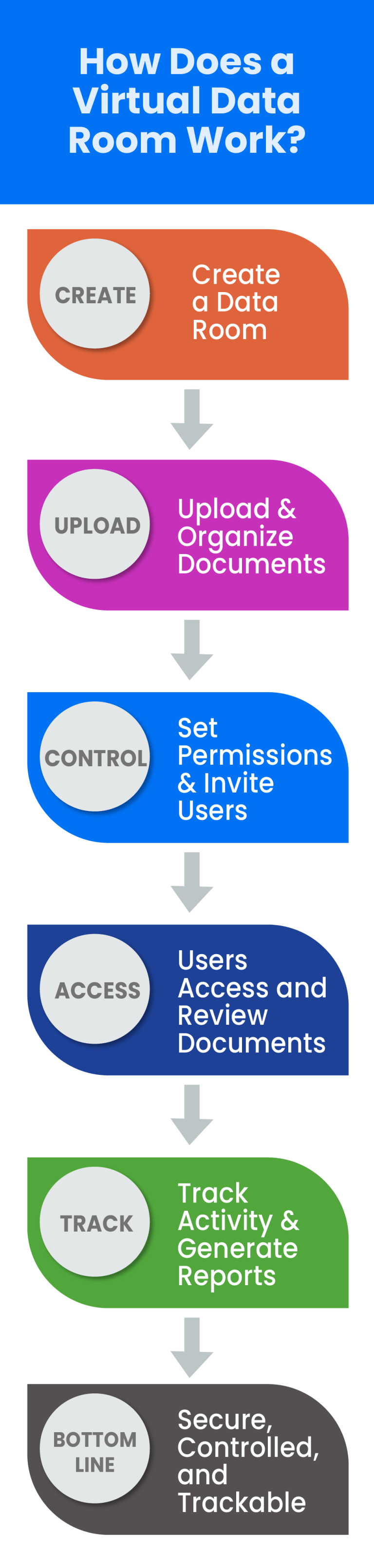
Administrators can typically create different user groups, control access at the folder or document level, and determine whether users can view, download, print, or otherwise interact with particular files.
VDRs may also provide safeguards such as dynamic watermarking, multi-factor authentication, access expiration, document rights management, and encryption.
Greater Visibility Into Activity
Another major difference is visibility.
General cloud storage platforms may provide some activity information, but VDRs are typically designed to give administrators a more detailed view of how external participants interact with transaction materials.
Depending on the platform, teams may be able to monitor logins, document views, downloads, printing, and other activity. Audit trails can help maintain accountability and provide a clearer record of how information moved throughout the process.
VDRs can also include tools for indexing, search, Q&A, reporting, redaction, and other tasks associated with document-heavy reviews.
The point is not that cloud storage is inherently unsuitable. It solves a different problem.
Cloud storage helps teams store and collaborate on files efficiently. A virtual data room helps organizations manage confidential information when access, accountability, and process control become more important.
Many companies therefore use both.
The practical question is not simply where files should be stored. It is whether the organization needs to manage what happens after sensitive information is shared with people outside the immediate team.