
Artificial intelligence has become one of the most compelling investment opportunities in the technology sector. Startups are building products that automate complex workflows, improve decision making, and transform industries that have operated the same way for decades. For private equity firms and strategic acquirers, the potential to acquire innovative technology before it reaches widespread adoption is difficult to ignore.
But evaluating an AI company requires a different level of scrutiny than acquiring a traditional software business.
A compelling product demonstration can make a company appear technologically advanced. Impressive revenue growth can suggest strong market demand. A proprietary algorithm may sound like a valuable competitive advantage. Yet beneath those claims, buyers may discover significant dependencies, uncertain intellectual property rights, expensive infrastructure requirements, or business models that are difficult to defend.
The challenge for acquirers is separating genuine technological value from the excitement surrounding artificial intelligence.
As AI becomes embedded in more products and services, understanding these risks is becoming an essential part of technology M&A.

The Difference Between an AI Product and an AI Business
One of the first questions buyers should ask is surprisingly simple: What does this company actually own?
Not every business marketing itself as an AI company develops proprietary artificial intelligence. Many successful applications are built using foundation models supplied by third parties, with proprietary software, workflows, data, or customer experiences layered on top.
There is nothing inherently wrong with this approach. Building on existing AI infrastructure can accelerate development, reduce initial investment, and allow companies to focus on solving specific customer problems.
However, the distinction matters enormously during an acquisition.
A company that owns differentiated technology, valuable datasets, and deeply integrated customer workflows may have a stronger competitive position than one whose primary advantage is a user interface built around a widely available model.
Buyers need to understand where the actual value resides. Is it in the underlying technology, the customer relationships, the proprietary data, or the way the product integrates into existing business processes?
The answer influences valuation, competitive positioning, and the long term sustainability of the business.
Intellectual Property Ownership Is More Complicated Than It Appears
Intellectual property has always been a central consideration in technology acquisitions. Artificial intelligence introduces additional layers of complexity.
Traditional software diligence typically examines source code ownership, employee invention agreements, open source licenses, patents, and third party technology contracts.
AI diligence must also consider the origins of training data, model development practices, licensing restrictions, and the contractual rights associated with externally developed models.
For example, a company may claim to own a proprietary AI model while relying heavily on third party technology that carries commercial restrictions. Another business may have trained a model using datasets without adequately documenting the rights to use that information.
These issues can create uncertainty about whether the acquired technology can continue operating, be modified, or be commercialized as intended.
Buyers should also examine whether employees, contractors, and external development partners have properly assigned relevant intellectual property rights to the company.
The goal is not simply to confirm that the technology works. It is to establish that the buyer will have the legal rights necessary to operate and develop it after the transaction closes.
The Hidden Economics of AI Infrastructure
Traditional SaaS businesses are often evaluated using metrics such as annual recurring revenue, gross margins, customer acquisition costs, and net revenue retention.
Those metrics remain important for AI companies, but they may not tell the complete story.
Many AI applications depend on computationally intensive infrastructure. Model inference, cloud computing, data processing, and third party API usage can create substantial ongoing expenses.
These costs may increase as customers use the product more frequently.
Consider an AI company offering a subscription service that allows customers to analyze thousands of documents. Revenue may appear predictable because customers pay an annual subscription. However, the underlying processing costs may vary significantly depending on how extensively customers use the platform.
If the business has not carefully modeled these expenses, strong revenue growth could conceal deteriorating unit economics.
Buyers should examine gross margins at the product and customer level, infrastructure commitments, pricing structures, and the sensitivity of profitability to increased usage.
They should also evaluate whether the company can reduce costs through model optimization, alternative infrastructure providers, or changes to its technology architecture.
A fast growing AI business can still be an unattractive acquisition if its economics become less favorable as adoption increases.
When Your Competitive Advantage Belongs to Someone Else
Another challenge involves dependency on third party AI providers.
Many companies build applications using models developed by organizations such as OpenAI, Anthropic, Google, and other technology providers. These relationships can offer access to advanced capabilities without requiring the enormous investment needed to develop foundation models independently.
But they also create strategic dependencies.
What happens if a provider changes its pricing? What if an important model is discontinued or its capabilities change? Could the provider introduce a competing product that offers similar functionality directly to customers?
These are not hypothetical categories of risk. They are familiar issues in technology acquisitions, made more significant by the speed at which the AI ecosystem is evolving.
Buyers should understand how easily the target can switch providers, whether its technology depends on specific model capabilities, and what contractual protections exist.
They should also examine whether the company has built meaningful differentiation beyond access to a particular AI model.
The strongest AI businesses are not necessarily those using the most advanced technology. They are often those that have created valuable customer relationships, proprietary workflows, specialized expertise, and integration advantages that competitors cannot easily reproduce.
Data Quality and Data Rights Can Determine Long Term Value
Artificial intelligence depends heavily on data, making data governance a critical component of acquisition diligence.
A company may have developed an impressive model using proprietary datasets collected over many years. That information could represent a significant competitive advantage.
But the value of the dataset depends on more than its size.
Buyers need to understand where the information originated, whether it was collected lawfully, what permissions govern its use, and whether those rights transfer or remain available following an acquisition.
They should also examine the quality, accuracy, and relevance of the underlying information.
Poorly documented data sources can create legal uncertainty. Incomplete or biased datasets can undermine model performance. Restrictions in customer agreements may limit whether information can be used to train or improve AI systems.
These concerns become particularly important in regulated industries such as healthcare, financial services, and life sciences, where sensitive information may be subject to additional legal and contractual requirements.
For an acquirer, the ability to demonstrate clear data ownership and governance practices can be just as important as the performance of the AI model itself.
Security and Privacy Risks Extend Beyond Traditional Software
Cybersecurity has become a standard part of technology due diligence, but AI systems introduce additional vulnerabilities that buyers must understand.
Traditional security assessments examine access controls, infrastructure protections, incident response procedures, vendor relationships, and compliance practices.
AI applications may also be vulnerable to prompt injection, sensitive information disclosure, model manipulation, and unintended data exposure through third party services.
For example, an AI application that processes confidential customer documents must have appropriate safeguards to prevent information from being exposed to unauthorized users or external systems.
Buyers should investigate how the target handles customer data, whether information is retained by outside providers, and how the company monitors the behavior of its AI systems.
They should also evaluate internal employee practices.
Organizations that allow unrestricted use of public AI tools may inadvertently expose confidential business information, customer records, or proprietary source code.
A mature AI company should be able to explain its security architecture, data handling policies, incident response procedures, and approach to ongoing risk management.
A sophisticated product demonstration is not a substitute for sound information security.
Regulatory Exposure Is Becoming a Bigger Part of the Equation
Artificial intelligence regulation continues to evolve, creating another area of uncertainty for technology acquirers.
The European Union’s AI Act establishes requirements for certain AI systems based on their risk classifications, while privacy, consumer protection, intellectual property, and sector specific laws may also apply to AI activities.
For companies operating internationally, compliance obligations can vary considerably across markets.
An AI application used to automate marketing content may face a different regulatory environment than a system used in healthcare, employment decisions, or financial services.
Buyers should assess where the target operates, how its products are used, and whether management has identified the legal requirements that apply to its technology.
They should also consider the potential costs of compliance.
Documentation, testing, human oversight, monitoring, and governance programs may require additional investment as regulatory expectations develop.
These expenses can influence future profitability and should be considered when evaluating acquisition economics.
The Risk of Acquiring Technology That Becomes Obsolete
Technology acquisitions have always involved the possibility that innovation will outpace the acquired product.
AI has intensified that risk.
Capabilities that required significant development investment a year ago may become available through widely accessible models or software platforms. Features once considered differentiated can quickly become standard expectations.
This creates a difficult question for acquirers: Will the target’s competitive advantage remain meaningful as the technology improves?
A company whose value depends primarily on access to a particular AI capability may face substantial competitive pressure as that capability becomes cheaper and more widely available.
By contrast, businesses with strong distribution, proprietary customer data, specialized industry knowledge, and deeply embedded workflows may be better positioned to benefit from continued improvements in AI technology.
Buyers should evaluate the durability of the business model rather than assuming today’s technological advantage will remain intact.
They should also consider how much additional investment will be required to keep the product competitive.
In AI acquisitions, the cost of maintaining a technological advantage can be just as important as the cost of acquiring it.
Why AI Due Diligence Requires a Different Approach
The growing complexity of AI businesses means traditional technology due diligence may need to expand.
Financial, legal, commercial, and technical reviews remain essential. However, buyers increasingly need specialists who understand machine learning architectures, data governance, model dependencies, and AI specific security risks.
A thorough process should connect these disciplines rather than evaluating them independently.
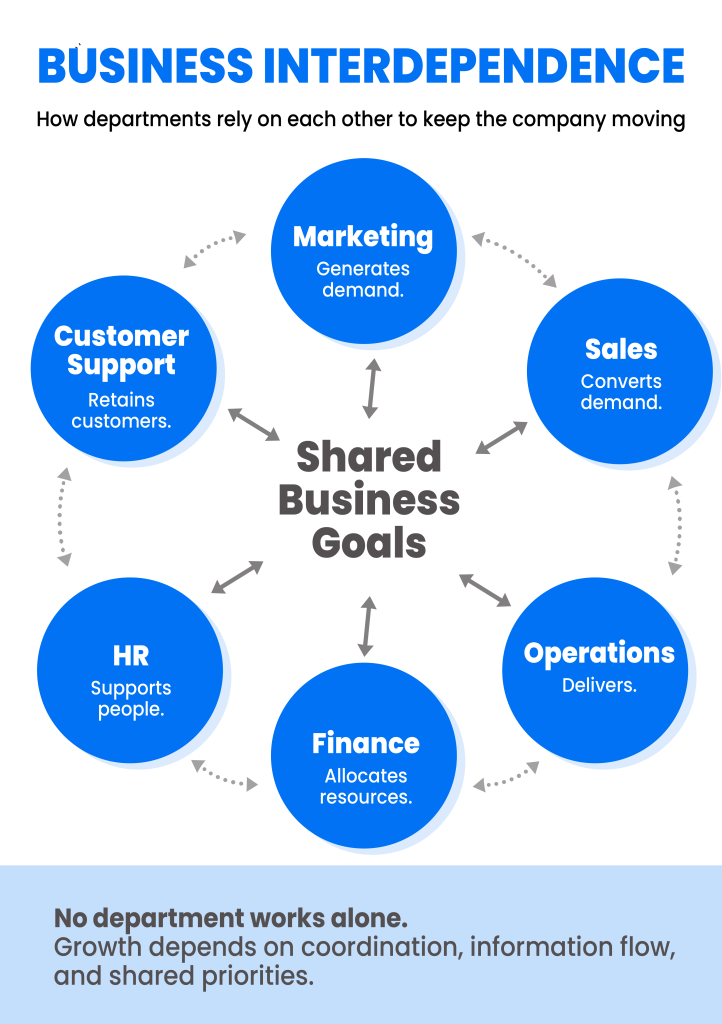
For example, a technical review may reveal that an application depends heavily on an expensive third party model. That finding should influence the financial team’s assessment of gross margins and the commercial team’s evaluation of pricing power.
Similarly, questions about training data ownership may affect both the legal assessment of intellectual property and the strategic evaluation of the company’s competitive advantage.
These findings are interconnected, and buyers need a coordinated process for understanding their combined impact on valuation.
The objective is not to eliminate every potential risk. No technology acquisition is free of uncertainty.
It is to understand which risks are manageable, which require additional investment, and which could fundamentally undermine the acquisition thesis.
The Best AI Acquisitions Start With Better Questions
Artificial intelligence will continue creating opportunities for companies to develop innovative products, enter new markets, and transform established industries.
For investors and strategic acquirers, the potential rewards are significant.
But the excitement surrounding AI should not replace the discipline required for successful acquisitions.
A polished demonstration does not establish intellectual property ownership. Rapid customer growth does not guarantee attractive economics. Proprietary technology does not necessarily create a sustainable competitive advantage.
The most successful buyers will be those willing to look beyond the pitch deck and examine the foundations of the business.
They will ask difficult questions about ownership, dependencies, profitability, security, and long term differentiation. They will involve the right technical and legal experts, challenge assumptions, and ensure that management’s claims are supported by reliable documentation.
Ultimately, acquiring an AI company is not simply a bet on what its technology can do today.
It is an investment in what the business can sustainably deliver tomorrow.
And understanding that distinction may be the difference between acquiring a lasting competitive advantage and paying a premium for technology the market quickly leaves behind.