The first half of 2026 is nearly behind us.
For many deal teams, the pace has been relentless. New mandates, tighter timelines, increased buyer scrutiny, and growing use of artificial intelligence have reshaped how transactions move from opportunity to close.
Now is the perfect time to pause and evaluate.
The second half of the year has historically been one of the busiest periods for mergers and acquisitions. Many business owners who delayed transactions earlier in the year are preparing to enter the market, while private equity firms and strategic buyers continue looking for quality opportunities before year end.
The firms that perform best are rarely the ones scrambling in September.
They are the ones asking the right questions in June.
Here are seven questions every deal team should be asking before entering the second half of 2026.
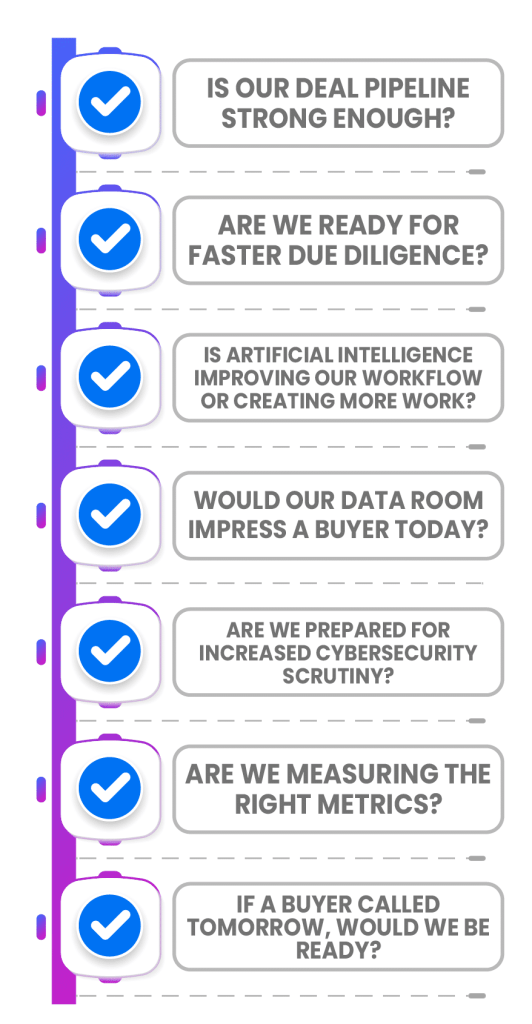
1. Is Our Deal Pipeline Strong Enough?
A healthy pipeline is more than a list of potential opportunities.
It should include qualified targets, realistic timelines, engaged buyers or sellers, and a clear understanding of where each opportunity stands.
Now is the time to identify stalled transactions, reassess priorities, and focus resources on opportunities most likely to close before the end of the year.
Quality often matters more than quantity.
2. Are We Ready for Faster Due Diligence?
Buyer expectations continue to rise.
Artificial intelligence, automation, and advanced analytics allow buyers to review documents and identify potential concerns faster than ever before.
This means sellers and advisors have less time to react.
Ask yourself:
- Are key financial documents current?
- Are contracts complete and properly organized?
- Can your team respond quickly to diligence requests?
- Are sensitive files protected while remaining accessible to authorized users?
Preparation today prevents unnecessary delays later.
3. Is Artificial Intelligence Improving Our Workflow or Creating More Work?
Nearly every deal team is experimenting with artificial intelligence in some capacity.
Some are seeing meaningful productivity gains.
Others are creating new challenges through inconsistent outputs, poor governance, or unverified information.
Midyear is an excellent opportunity to evaluate how your team is using artificial intelligence.
The goal is not to adopt every new tool.
The goal is to identify technology that genuinely improves speed, accuracy, and collaboration while maintaining the confidentiality that transactions demand.
4. Would Our Data Room Impress a Buyer Today?
Many organizations treat the data room as something they build after a transaction begins.
Experienced dealmakers know better.
An organized data room demonstrates professionalism, discipline, and readiness before the first diligence request ever arrives.
Review your current environment.
Are folders logically organized?
Are permissions current?
Are outdated documents archived?
Could a buyer easily navigate the information without unnecessary confusion?
Small improvements today can create stronger first impressions tomorrow.
5. Are We Prepared for Increased Cybersecurity Scrutiny?
Cybersecurity is no longer just an information technology concern.
It has become a transaction issue.
Buyers increasingly evaluate security practices as part of operational risk assessments.
Questions surrounding access controls, document security, compliance, and governance are becoming standard during diligence.
Teams that can demonstrate strong security practices often inspire greater buyer confidence throughout the transaction.
6. Are We Measuring the Right Metrics?
Successful deal teams monitor more than revenue projections.
Consider evaluating metrics such as:
- Average diligence response time
- Time required to prepare transaction materials
- Document completeness
- Buyer engagement during diligence
- Internal approval timelines
- Deal cycle length
These operational indicators often reveal opportunities to improve efficiency before transactions become more demanding later in the year.
7. If a Buyer Called Tomorrow, Would We Be Ready?
This may be the most important question of all.
Unexpected opportunities happen.
Strategic buyers make unsolicited offers.
Investors reach out without warning.
Companies receive acquisition interest months before they originally planned to sell.
Would your organization be ready?
Could your advisors launch a diligence process immediately?
Would management spend time negotiating the transaction or searching for documents?
The answer often determines how much leverage a seller has from the very beginning.
The Best Time to Prepare Is Before the Market Accelerates
Every year, the second half of the calendar brings renewed urgency to the deal market.
Deadlines become tighter.
Schedules become fuller.
Expectations become higher.
Organizations that invest time now to strengthen their processes, organize their information, and evaluate their readiness will enter the second half of 2026 with a meaningful advantage.
Deals move quickly when preparation meets opportunity.
The question is whether your team will be ready when that opportunity arrives.