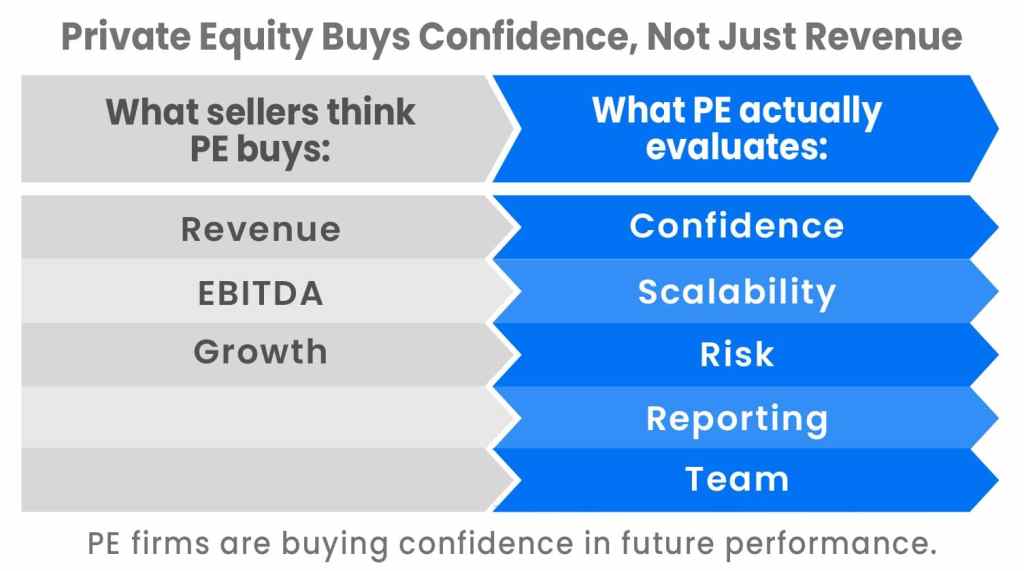
Private equity firms are not simply buying revenue. They are buying confidence.
When a PE firm evaluates an acquisition target, it is looking for evidence that the business can continue growing after the transaction closes. Strong financial performance matters, but buyers also want operational discipline, reliable reporting, scalable processes, and a management team capable of executing a growth strategy.
The difference between a smooth transaction and a prolonged, discounted, or failed deal often comes down to preparation long before due diligence begins.
For business owners planning an exit, investment bankers managing a sell-side process, and advisors supporting transactions, understanding what private equity firms expect to see can significantly impact valuation and deal outcomes.
The First 30 Days of Buy-Side Due Diligence
The first month of due diligence often determines the trajectory of an acquisition.
Private equity firms typically begin by validating the information presented during the marketing phase. Buyers are looking to confirm that the story matches reality.
Early diligence requests often focus on:
- Historical financial statements
- Monthly financial reporting packages
- Revenue and customer concentration analysis
- EBITDA adjustments and add-backs
- Organizational charts
- Customer contracts
- Supplier agreements
- Tax records
- Legal and compliance documentation
- Technology infrastructure and cybersecurity practices

During this phase, responsiveness matters. Buyers notice when requested documents are readily available, organized, and supported by clear explanations.
Conversely, delays, incomplete information, or conflicting data can create doubt and lead buyers to scrutinize other aspects of the business more aggressively.
As many experienced dealmakers say, momentum is one of the most valuable assets in any transaction. Once confidence begins to erode, it becomes difficult to restore.
Financial Red Flags That Slow Deals
Financial diligence is often where buyers uncover the issues that create valuation pressure.
Some of the most common financial concerns include:
Inconsistent Financial Reporting
Private equity firms want reliable financial data that demonstrates consistency over time. Frequent adjustments, unexplained variances, or poor reporting controls can raise concerns about the accuracy of future projections.
Customer Concentration Risk
When a large percentage of revenue depends on a handful of customers, buyers see increased risk. Losing a key account after closing can dramatically affect returns.
Weak Cash Flow Visibility
Strong revenue growth is attractive, but buyers ultimately want predictable cash generation. Poor cash flow management often signals deeper operational challenges.
Aggressive EBITDA Adjustments
Most sellers present adjusted EBITDA figures during a transaction. However, excessive or poorly documented add-backs can undermine credibility and trigger additional diligence.
Incomplete Financial Documentation
Missing tax filings, inconsistent accounting records, or inadequate audit support can significantly delay the diligence process and increase buyer concerns.
When financial records are well-organized and readily accessible, buyers can focus on evaluating opportunity rather than searching for problems.
Operational Red Flags
Financial performance tells buyers what happened. Operational diligence helps them understand why it happened and whether performance can continue.
Common operational concerns include:
Overdependence on the Owner
Many lower-middle-market businesses rely heavily on the founder for customer relationships, sales, decision-making, and strategic direction.
Private equity firms prefer businesses that can continue operating successfully without requiring constant owner involvement.
Lack of Documented Processes
Scalability becomes difficult when critical workflows exist only in employees’ heads.
Buyers often look for documented processes related to:
- Sales operations
- Customer onboarding
- Financial management
- Compliance
- Human resources
- Technology systems
Technology and Cybersecurity Gaps
Cybersecurity is now a standard diligence category in most transactions.
Outdated systems, inadequate controls, and poor security practices can create significant post-acquisition risks.
Regulatory and Compliance Exposure
Depending on the industry, buyers may evaluate:
- Data privacy requirements
- Industry regulations
- Environmental obligations
- Licensing requirements
- Employment compliance
Unresolved compliance issues can quickly become deal risks.
Employee Retention Concerns
Private equity firms invest heavily in people as well as businesses.
High turnover, unclear leadership succession, or dependence on a small number of key employees may create concerns about post-close stability.
Why Deal Readiness Impacts Valuation

Many business owners assume valuation is determined solely by financial performance.
In reality, transaction readiness often influences valuation just as much as growth metrics.
When buyers encounter uncertainty, they compensate by reducing risk through:
- Lower purchase price multiples
- Larger escrow requirements
- Increased earnout structures
- More restrictive representations and warranties
- Extended diligence timelines
On the other hand, well-prepared companies often benefit from:
- Faster diligence cycles
- Greater buyer confidence
- Increased competitive tension
- Stronger negotiating leverage
- Higher valuation multiples
Preparation reduces uncertainty, and reduced uncertainty often translates directly into enterprise value.
Lessons From Successful Transactions
Across successful acquisitions, several common themes emerge.
First, the strongest sellers begin preparing well before they go to market. Many start organizing financial records, contracts, compliance documentation, and operational information 12 to 24 months before launching a process.
Second, transparency consistently outperforms perfection. Buyers understand that every company has challenges. What they want is clear disclosure, supporting documentation, and confidence that management understands the issues.
Third, organization creates momentum. When buyers can quickly access information, diligence moves faster, confidence increases, and deal timelines stay on track.
Finally, companies that centralize and secure transaction documentation are often able to maintain control throughout the process while reducing administrative burden on management teams.
Preparation Creates Value
Private equity firms are evaluating far more than revenue and EBITDA. They are assessing risk, scalability, operational maturity, and confidence in future performance.
Whether you are preparing your own company for an exit, advising a client through a sale process, or supporting a transaction as an investment banker, preparation remains one of the most effective ways to maximize value.
The companies that achieve the best outcomes are rarely the ones scrambling during diligence. They are the ones that prepared long before buyers started asking questions.
Ready to Support Your Next Transaction?
ShareVault helps investment bankers, private equity firms, and business owners organize due diligence, securely share confidential information, and maintain deal momentum throughout the transaction lifecycle.
Whether you’re preparing for an exit or supporting one, preparation drives valuation.
Learn how ShareVault helps deal teams stay organized, responsive, and deal-ready from the first diligence request to closing.